
NEWS POST
Healthcare Real Estate Insights: Strategic Shift Beyond “Main & Main”

This article draws from the exclusive healthcare real estate insights shared at the MNREJ Medical Properties Summit on February 11, 2026, during the Development and Market Trends in Healthcare Real Estate session. Moderated by Steve Brown, CCIM, Principal at Forte, the discussion brought together a powerhouse panel of industry leaders who are actively shaping the future of healthcare real estate. Their perspectives—captured live and distilled here—offer a forward‑looking view into how providers, investors, and developers are redefining strategy in a rapidly evolving healthcare market.
For more than a decade, healthcare real estate followed a familiar playbook: prioritize visibility, maximize convenience, and secure space at prominent intersections. “Main & Main” locations were viewed as essential for patient access, brand presence, and growth.
Today, that strategy is evolving. While convenience remains important, healthcare providers are increasingly guided by reimbursement pressure, staffing constraints, capital discipline, and changing care delivery models. The result is a fundamental shift in how healthcare organizations evaluate location—and what truly drives long-term value.
From Visibility to Financial Discipline
Historically, healthcare providers expanded aggressively to ensure care was available close to patients. Greater proximity was expected to drive utilization and strengthen market position. But rising operating costs and reimbursement pressures have forced providers to rethink that approach.
High-rent, high-visibility locations are no longer automatically justified. Instead, healthcare organizations are asking whether premium locations generate measurable returns—or simply increase occupancy costs without improving performance.
Capital discipline has become central to real estate strategy. Healthcare providers are prioritizing locations that improve operational efficiency, support clinical integration, and align with long-term financial sustainability.
In this environment, the economics of the service line matter as much as the location itself. Not every clinical use can support Class A medical office rents—and not every service requires it. Lower-margin specialties such as behavioral health, therapy, or certain rehabilitation services may be better aligned with more cost-efficient building types, including single-story flex or light industrial properties that can deliver appropriate functionality at materially lower occupancy costs.
Conversely, high-acuity or procedure-driven specialties with stronger margins may justify premium visibility or proximity to hospital campuses. The shift is not away from growth—it is toward alignment: matching real estate product type and rent structure to the financial profile of the service being delivered.
Specialty Care May Change the Location Equation
One of the potential areas where this shift may become more visible is how specialty care is accessed. Unlike primary care, specialty patients can be less sensitive to location than availability and expertise. They need to see a specialist, and it is less about convenience and more about the quality of care.
Patients may be willing to travel farther or find a less visible location to access specialists if it means faster appointments or better care. Referral patterns, physician reputation, and network alignment now drive demand more than proximity alone.
As a result, some specialty healthcare practices—including orthopedics, oncology, dermatology, and neurology—may become less dependent on “Main & Main” visibility and the high cost associated with locating there. Providers are increasingly considering alternative locations that offer cost advantages and stronger operational alignment.
The Rise of Regional Hubs
Healthcare providers are continuing to evaluate and adopt “hub-and-spoke” models to provide services to their patients where it makes sense. They can often consolidate higher cost infrastructure into regional hubs to leverage costs which in turn are supported by referrals from smaller satellite locations.
Regional hubs improve staffing efficiency, care coordination, and operational performance. Proximity to hospital campuses and diagnostic infrastructure has become a strategic priority, often outweighing retail-style visibility.
Workforce challenges are also accelerating this shift. Provider shortages and staffing constraints have made it critical to locate facilities where clinical teams can operate efficiently.
A Shift from Volume to Value
Healthcare’s transition from volume-based to value-based care has introduced a more analytical approach to real estate decisions. Instead of maximizing visit volume across numerous sites, providers are focusing on efficiency, outcomes, and financial performance.
Location decisions are increasingly driven by factors such as:
- Population demand and market share
- Payer mix and reimbursement levels
- Integration with health system infrastructure
- Staffing efficiency and operational performance
- Long-term financial sustainability
Visibility alone is no longer enough—locations must support the provider’s broader business and clinical strategy.
Greater Flexibility in Site Selection
To manage costs and improve efficiency, healthcare organizations are exploring a wider range of real estate solutions, including office conversions, adaptive reuse, and campus optimization.
Existing office space can offer viable opportunities for outpatient services such as imaging, physical therapy, and specialty clinics. At the same time, providers are reassessing existing facilities to improve utilization and operational alignment.
These opportunities require careful evaluation, as healthcare facilities have specialized infrastructure needs. Successful site selection must balance cost savings with clinical functionality and long-term flexibility.
Main & Main Still Matters—But More Selectively
Prominent locations have not lost relevance entirely. Urgent care and access-driven primary care still benefit from strong visibility and accessibility, often serving as entry points into broader healthcare networks.
However, “Main & Main” is no longer the default strategy. Providers are reserving premium locations for services that truly benefit from visibility while allowing specialty and referral-driven practices greater flexibility.
Implications for Owners and Investors
For owners, developers, and investors, this shift presents both challenges and opportunities. Healthcare tenants are becoming more strategic and selective, prioritizing operational alignment and financial performance over visibility alone.
Properties near hospital campuses or integrated health systems are likely to see sustained demand, while standalone retail-style locations may face greater scrutiny. However, a continued expansion of procedures and services that can be provided in an ambulatory setting create competition with on campus facilities that were once the norm.
Healthcare real estate remains a resilient asset class, but success increasingly depends on aligning real estate with modern care delivery models.
The Bottom Line
Industry insights reveal that healthcare real estate is not abandoning convenience—it is redefining it.
Providers are focusing on fewer, more strategic locations that support operational efficiency, care coordination, and financial sustainability. “Main & Main” still has a role—but it is no longer the default answer.
The future of healthcare real estate will be shaped by disciplined site selection and facilities designed to support how care is delivered today—and where it’s headed next.
Ready to ensure your healthcare real estate strategy aligns with today’s rapidly evolving market? Connect with our experienced Forte advisors.
Healthcare Real Estate Services
Our Healthcare Real Estate Advisors focus solely on representing physicians, hospitals, and other medical professionals with their commercial real estate needs: from advisory to short and long-term planning, to construction and renovation project management and lease administration.
Healthcare Team


Ericka Miller, CCIM
Vice President | Real Estate Advisory
o: 952-854-8309
c: 952-452-2919
ericka.miller@forterep.com

Katie Trevena
Vice President | Real Estate Advisory
o: 952-525-3332
c: 612-481-1699
katie.trevena@forterep.com

News & Updates
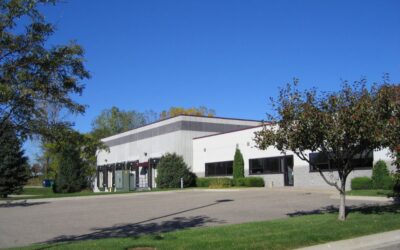
Forte Secures a Full-Building 30,128 SF Industrial Lease in Eagan
NEWS POSTForte Secures a Full-Building 30,128 SF Industrial Lease in EaganMinneapolis (March 4, 2026) – Forte Real Estate Partners has finalized a long-term, full-building lease for the 30,128 square foot industrial property at 3109 Neil Armstrong Blvd in Eagan,...

Forte Represents Summit Orthopedics in 80,000 SF Built-to-Suit Clinic at Scannell’s Plymouth Development
CASE STUDYForte Represents Summit Orthopedics in 80,000 SF Built-to-Suit Clinic at Scannell's Plymouth Development Quick Highlights Project: 80,000 SF Build-to Suit Orthopedic Hub Location: "The Boulevard" Redevelopment, Plymouth, MN...

Get to Know Forte: Five Questions with Jaime Dritz
NEWS POSTGet to Know Forte: Five Questions with Jaime Dritz Meet the people behind Forte! We asked Jaime Dritz, client coordinator at Forte Real Estate Partners, a few fun questions. It’s a quick way to get to know Jaime and the Forte...